





Image courtesy of Wine Growers British Columbia.
From replanting to changing what is planted where and working on cold mitigation, B.C. wineries are bouncing back
British Columbia wineries faced enormous challenges after back-to-back freeze events killed vines and severely reduced crops in 2023 and 2024. Growers and winemakers in the area, however, are showing their resilience and are working to come out of the current crisis stronger than ever.
Corcelettes Estate Winery, Keremeos, B.C.

Charlie Baessler, Corcelettes Winery
After the December 2022 freeze event, Charlie Baessler, managing partner at Corcelettes Winery in the Similkameen Valley, initially focused on retraining vines. Then the second winter cold event hit.
“You start looking at your vineyard assets through a different lens, where posts and wires are fatiguing or irrigation systems aren’t lined up,” Baessler says.
Corcelettes subsequently began a replanting program. Of the 31 acres the winery had at the time, 19 have been replanted.
“The idea was to do it better,” Baessler says. “We were able to really realign our irrigation systems with more efficient emitters and pressure compensating valves and all the things that ultimately reduce our water usage.”
In replanting, Baessler also evaluated what was planted where to best fit varietal and location. “We’ve moved all of our Syrah, for example, to the steepest, highest, stoniest vineyard sites for us, while our Pinot now occupies the lower, more fertile, potentially cooler areas of our estate vineyards,” he says.
Corcelettes also began using straw mulch to reduce the risk of cold events and to increase sustainability. “We thought what a great way to not just protect this significant investment but also to take leaps forward and improve sustainability in terms of water retention and weed suppression,” Baessler says. As a result, Corcelettes has been able to practice no till farming and abstain from chemical weed suppression.
“I’m a glass half full guy, and so we looked for the opportunity to do something that we typically would never do and completely rebuilt our vineyard maps,” Baessler says. “We’re really excited about what the next 25-35 years looks like for those vineyards.”
Black Hills Estate Winery & Tinhorn Creek Winery, Oliver, B.C.

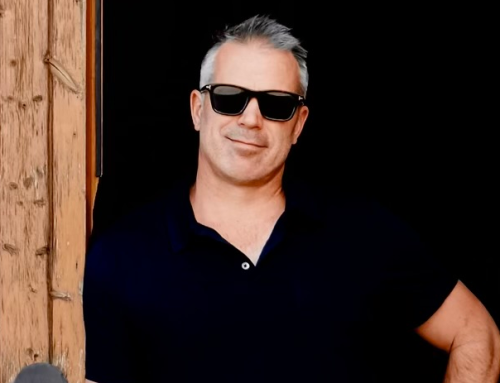
Bobby Ercego, Black Hills Estate Winery & Tinhorn Creek Vineyards
Andrew Peller Ltd., Canada’s largest premium wine producer, had already been planning to do a five-year replanting program. After the recent freezes, the company accelerated and expanded its plans.
“It’s not a blessing in disguise whatsoever,” says Bobby Ercego, vineyard manager for Andrew Peller’s Black Hills Estate Winery and Tinhorn Creek Vineyards. “But it’s one of those things where, if you had old blocks that were diseased, you’re able to pull them out and also stick with what the market is demanding,”
In replanting, the company has adjusted what is planted where based on soil profile, site microclimate, and seasonal experiences. The result, the winery hopes, will lead to increases in overall wine quality and improved growing season resilience.
“With putting the right varieties, or what we think the right varieties are, in the right place, it’s like taking some really good land and making sure we’re doing it justice to be able to make some really good wine out of those grapes,” Ercego says.
To help mitigate damage for future cold events, Ercego and the vineyards team has also been trialing various cold suppression techniques. Ercego, who also serves as president of the B.C. Grape Growers Association, intends to share the results with the industry as reports are finalized.
“We’re growing grapes in the Arctic as far as I’m concerned,” he says. “Anything we can learn and do, we have to do it here because there’s not a lot of other regions in the world that are doing it like we are.”
Overall, Ercego says the freeze events challenged the British Columbia wine industry, but the industry has responded. “Wineries’ doors are staying open. Growers are replanting. We’re adapting varieties and places and maybe not planting vineyards in certain areas. I see us coming out of it quite strong on both facets of the industry.”
Bartier Bros. Vineyards & Winery, Oliver, B.C.
 After the 2024 freeze, Michael Bartier, general manager at Bartier Bros., made two decisions. One was to take on management contracts for other vineyards where it had right of first refusal of fruit to help shore up its grape needs. The second was to begin a replanting program.
“In the end, we are a business, and the first job of a business is to be in business,” Bartier says. “After that big freeze, the financial viability of our business was in jeopardy and like most farmers, you don’t just sit there and wait for something to come to you, you act.”
Bartier has replanted 70 acres, 48% of the acreage owned, leased, or managed by the winery.
“That doesn’t mean that 50% of them died, but you can’t just go and replant 55% of a block because you’ll be fighting the non-uniformity in that block for 15 years,” Bartier says.
Bartier Bros. has planted own-rooted vines, as opposed to rootstock, where possible. This is a change so that vines can be trained up from the ground when there is another freeze. The location of some varieties has been changed. Syrah, hard hit by the freezes, was not replanted.
The winery also trialed burying canes to protect against winter damage but ultimately settled on burying the base of the vines. The hope is that even if the winery loses a crop, the vines will survive.
“I’m quite proud of how we responded and how our neighbors responded,” Bartier says. “If I was to try to predict the future here, my feeling is that British Columbia wines – Okanagan and Similkameen in particular because they were hit the most by the cold – are going to be better on the aggregate.”
Do you enjoy Northwest Wine Report? If you do and haven’t already, please subscribe during our FALL SUBSCRIBER DRIVE. Northwest Wine Report is 100% subscriber funded. Subscribe here. It’s the cost per month of a cup of coffee and a crumpet. To those who have subscribed, thank you! You power this site.


Leave A Comment