




 It looks as if the government has done something to help wineries, when the actual effect might not be that different than doing nothing while saying no more assistance is coming. It’s an outrage.
The British Columbia Liquor Distribution Branch (BCLDB) announced this week that it was extending vintage replacement support to local wineries affected by the 2024 freeze. Qualified B.C. wineries that received relief last year are now eligible to purchase grapes, juice, and unfinished wine from areas beyond the province without being subject to the usual markup, within certain limitations.
At present, wines made from grapes outside the province are marked up 89% on the first $11.75 of the cost per liter of wine and 27% after that. Due to back-to-back freezes in December of 2022 and January of 2024, there is currently a severe shortage of grapes in the province and will be for the next several years. The industry is in crisis.
The memo to wineries, dated September 22nd, states, “The extension of the 2024 vintage replacement to include the 2025 vintage reflects the province’s commitment to protecting jobs, retaining highly skilled workers, and providing continued support to impacted wineries.”
Actually, it shows the exact opposite.
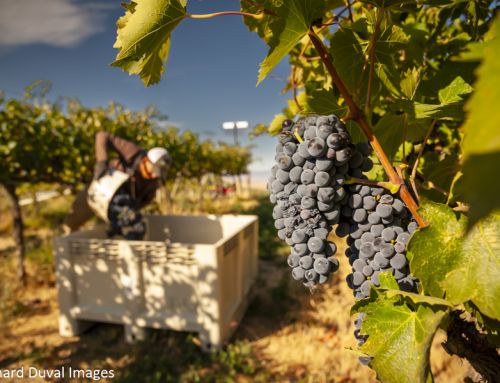
While the news of markup relief is surely welcome, it comes woefully late. We are now a full month into harvest in the Pacific Northwest. B.C. wineries looking to purchase white wine grapes will find that most have already been picked. Many red grapes have already been picked as well. Wineries would now have to rely on juice or unfinished wine, giving them considerably less control over the final product.
B.C. wineries looking for fruit or juice would ideally have negotiated contracts in the spring – almost six months previously. That opportunity was lost given the absurdly late BCLDB announcement.
Additionally, B.C. wineries might have to look further afield. Few Northwest growers are carrying a crop beyond what they are sure they can sell. Meanwhile, few bulk wineries in the Northwest are speculatively producing excess wine in the hopes that there will be someone to buy it. While there will surely be juice available, winemakers won’t necessarily get to be choosy about what it is and where it comes from.
The BCLDB memo goes on to say, “Government has made clear that this is a one time (sic) only extension: further extensions of these supports will not be considered.” This again shows a deaf ear to the long-term challenges B.C. wineries face.
The B.C. government itself estimated that 15% of vines were killed by the January 2024 freeze. A freeze in December of 2022 caused additional damage. A grape gap analysis commissioned in 2024 by the B.C. Ministry of Agriculture and Food showed that between 5,500 and 10,000+ acres of the province’s grape vines need to be replanted. This equates to 45% to 81% of existing acreage.
Winegrowers B.C. CEO Jeff Guignard said in a September 12th meeting that the group estimates that there is a shortage of approximately 10,000 tons of grapes in the province. For perspective, in 2023, B.C. produced 18,321 tons of grapes. This means that provincial wineries are potentially short more than half of their need. (Guignard estimates 40%.)
Replanting is the only long-term solution. However, it is expensive. More importantly, it takes two to three years after replanting to get a first crop in the best of circumstances. It then takes significant additional time for that crop to be turned into wine and sold. But the government says to expect nothing more than its already-too-late assistance?
One has to ask, why would the provincial government want to kill a golden goose? There are more than 300 wineries in British Columbia. The industry generates a reported $3.75B annually to the B.C. economy. Local wineries attract nearly 1.2M visitors per year, generating $609M in additional tourism-related revenue.
As recently as 2023, the industry employed 14,700 people. However, according to the Annual Labor Force Survey, in 2024, it employed only 8,200 people. That is a decrease of 44% in one year. Additional job losses and revenue decreases are surely coming due to the government’s late action.
B.C. wineries are critical to the local economy, yet the government acts as if they are not. As it stands with the announcement, it looks as if the government has done something to help wineries, when the actual effect might not be that different than doing nothing while saying no more assistance is coming. It’s an outrage.
B.C. wineries deserve much better treatment than they have received at present. The government also needs to show an urgency commensurate with the crisis at hand. So far, it has not.
There is no excuse for the vintage replacement announcement coming this late. The government’s long overdue action is guaranteed to hurt the local wine industry and the province itself.
If you haven’t already, please subscribe to Northwest Wine Report! This site is 100% subscriber funded and is my primary source of income. None of the content can be created without your subscription. Subscribe here. It’s the cost per month of a cup of coffee and a crumpet. To those who have subscribed, thank you! You power this site.
To receive articles via email, click here.




This is a shame seeing as how it is a bumper crop here in Washington this year. Lost opportunity I guess.